
Research Path
-
Advanced Monte Carlo methods for molecular simulations.
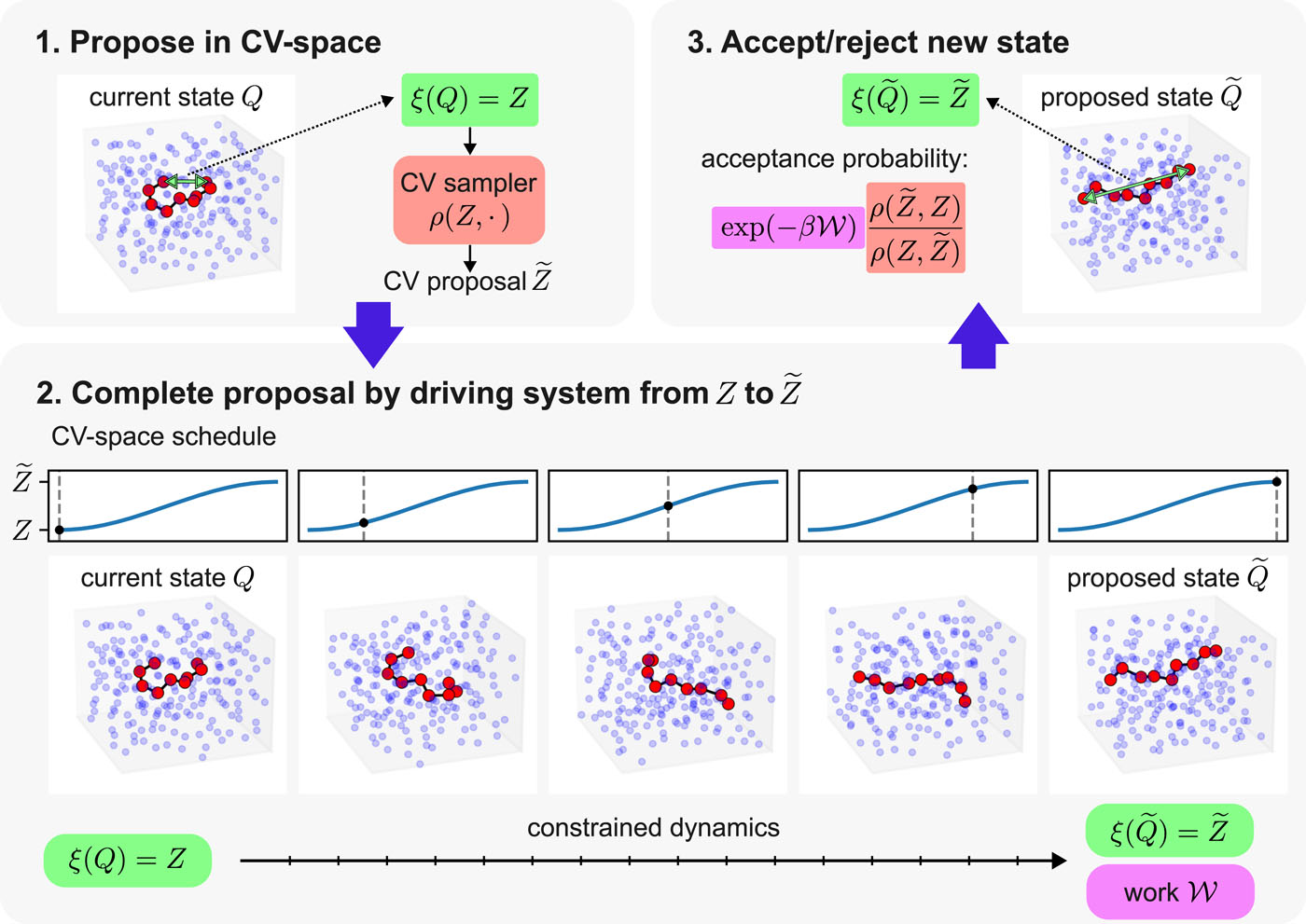
My current main research line, with Marylou Gabrié, Tony Lelièvre, Gabriel Stoltz, and Christoph Schönle, focuses on overcoming metastability in Monte Carlo simulations
of complex molecular systems. I work at the interface with modern generative machine-learning proposal samplers,
enabling efficient sampling in CV spaces of intermediate dimensionality and extending
their applicability to realistic molecular systems.
[14]
Schönle, C., Carbone, D., Gabrié, M., Lelièvre, T., & Stoltz, G. (2025). Efficient Monte-Carlo sampling of metastable systems using non-local collective variable updates. Accepted in: Journal of Chemical Physics. arXiv preprint arXiv:2512.16812. -
Non-equilibrium statistical mechanics and response theory.
My research in this area addresses time-reversal symmetry and response theory in classical and quantum systems, including dynamics with magnetic fields. I derived Onsager reciprocity relations and fluctuation theorems without Casimir modifications, showing that spin–field interactions preserve time-reversal invariance, with implications for transport and thermodynamic phenomena.
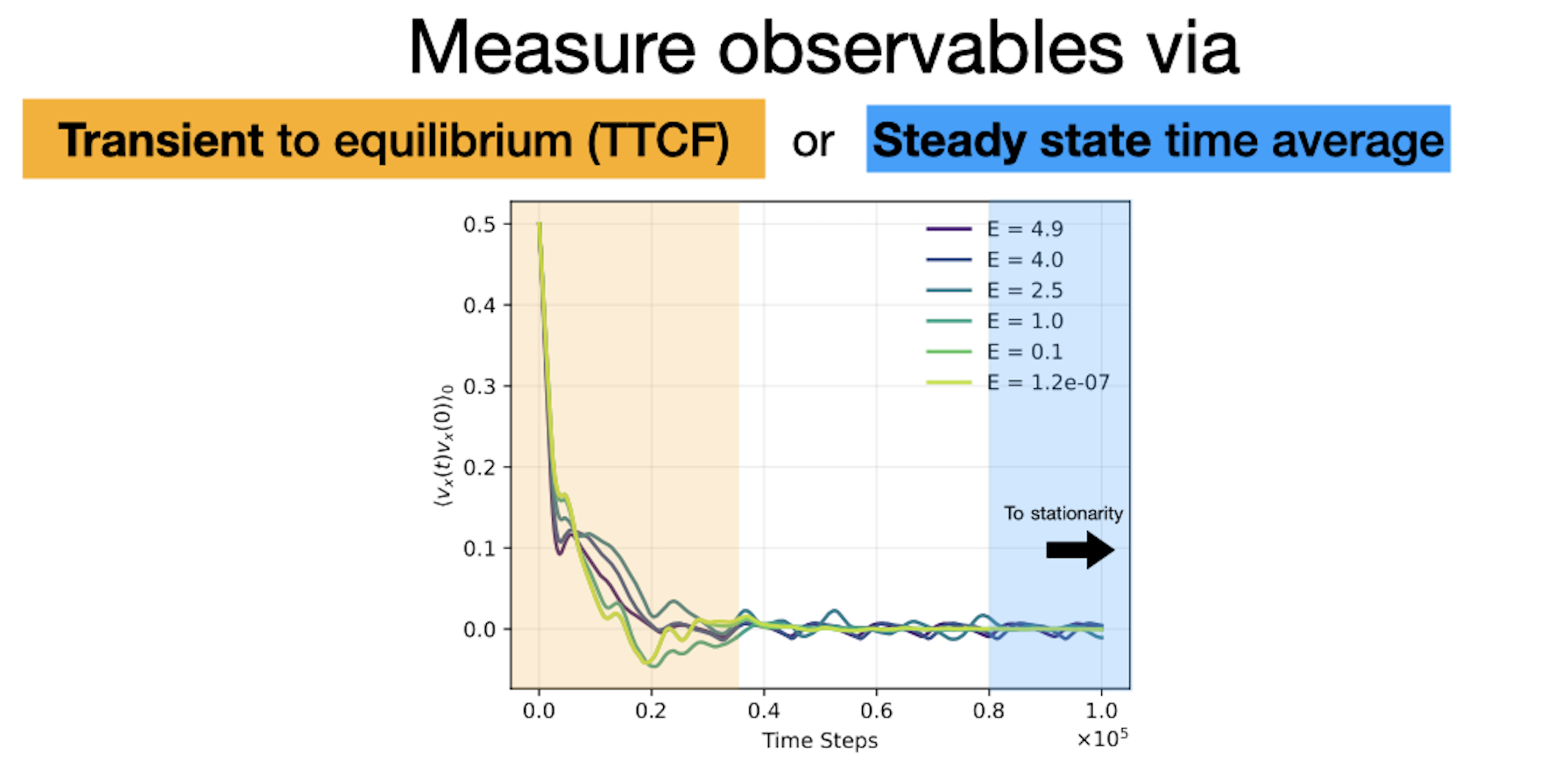
I also work on the transient time correlation function (TTCF) approach to nonequilibrium response, applying it to prototypical statistical mechanical models such as Fermi–Pasta–Ulam chains and the Lorentz gas, with a focus on anomalous transport and scaling behavior in low-dimensional systems.
[12]
Carbone, D., & Rondoni, L. (2020). Necessary and Sufficient Conditions for Time Reversal Symmetry in Presence of Magnetic Fields. Symmetry, 12(8), 1336.[11]
Carbone, D., De Gregorio, P., & Rondoni, L. (2022). Time Reversal Symmetry for Classical, Nonrelativistic Quantum and Spin Systems in Presence of Magnetic Fields. Annals of Physics, 441, 168880.[1]
Carbone, D., Di Florio, V., Lepri, S., & Rondoni, L. (2026). Computing Nonequilibrium Transport from Short-Time Transients: From Lorentz Gas to Heat Conduction in One Dimensional Chains. Accepted in: The Journal of Chemical Physics. -
Generative models and statistical physics.
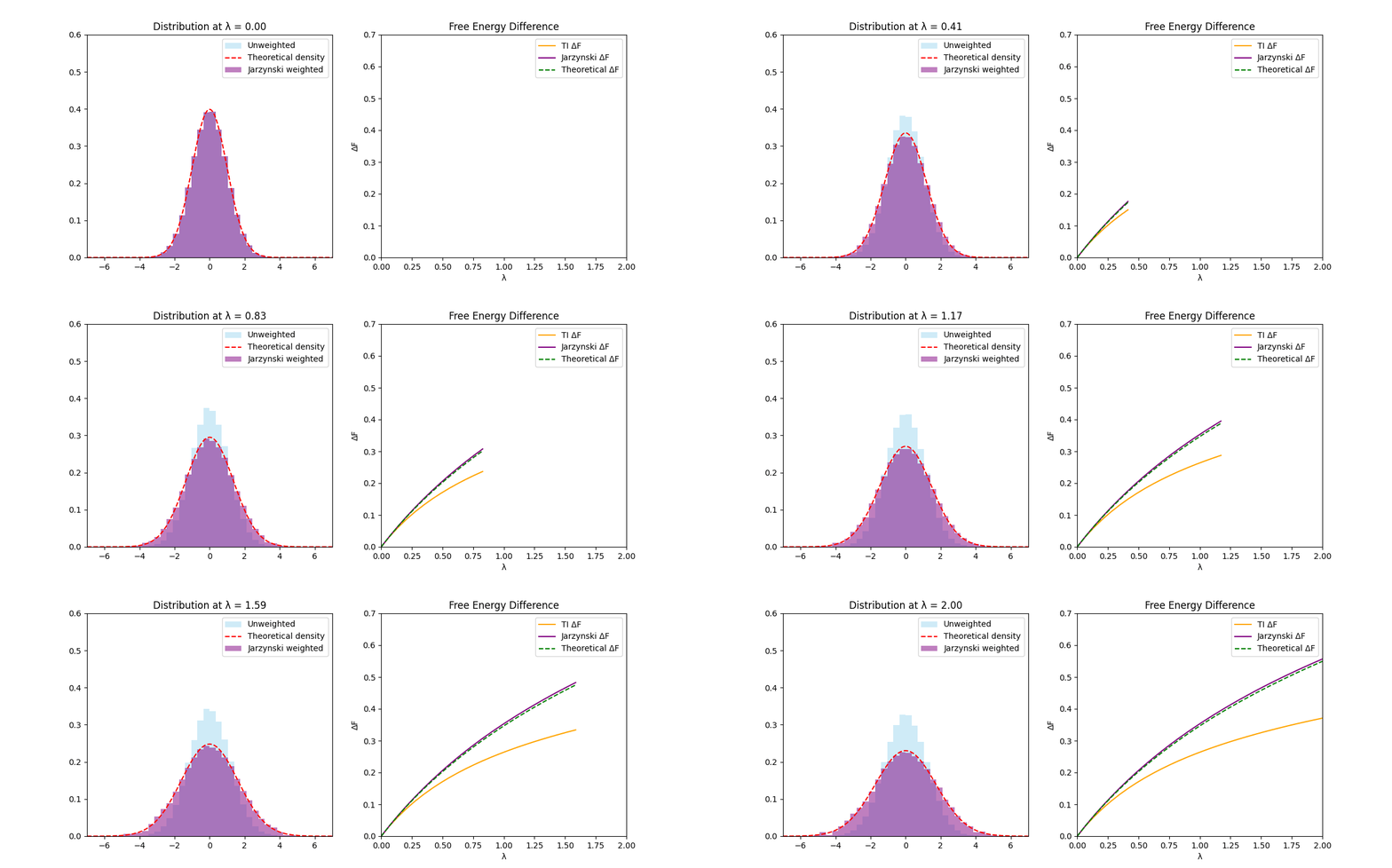
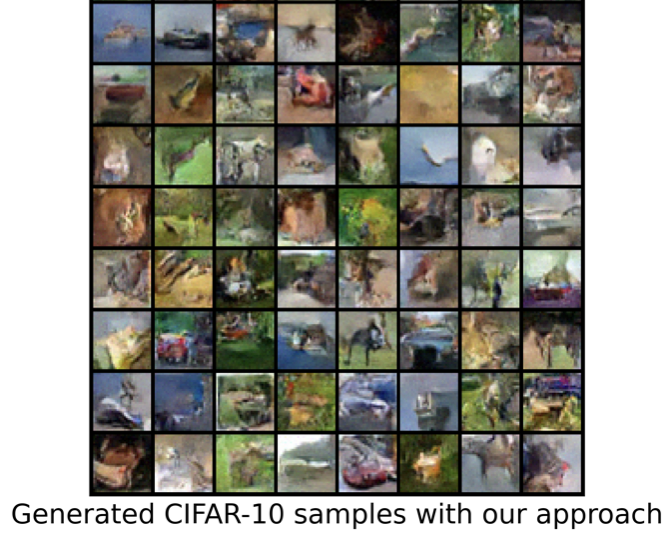
I apply non-equilibrium statistical mechanics to generative modeling, especially Energy-Based Models. Using Jarzynski’s free energy estimator and Sequential Monte Carlo methods, I developed unbiased training algorithms that outperform contrastive divergence, with applications to diffusion models and Restricted Boltzmann Machines.
[10]
Carbone, D., Hua, M., Coste, S., & Vanden-Eijnden, E. (2023). Efficient training of energy-based models using Jarzynski equality. NeurIPS 2023.[8]
Carbone, D., Hua, M., Coste, S., & Vanden-Eijnden, E. (2024, February). Generative models as out-of-equilibrium particle systems: training of Energy-Based Models using non-equilibrium thermodynamics. In International Conference on Nonlinear Dynamics and Applications (pp. 287-311).[4]
Carbone, D. Hitchhiker's guide on the relation of Energy-Based Models with other generative models, sampling and statistical physics: a comprehensive review. Transactions on Machine Learning Research (TMLR), 2025. -
Latent variable models and sequential Monte Carlo.
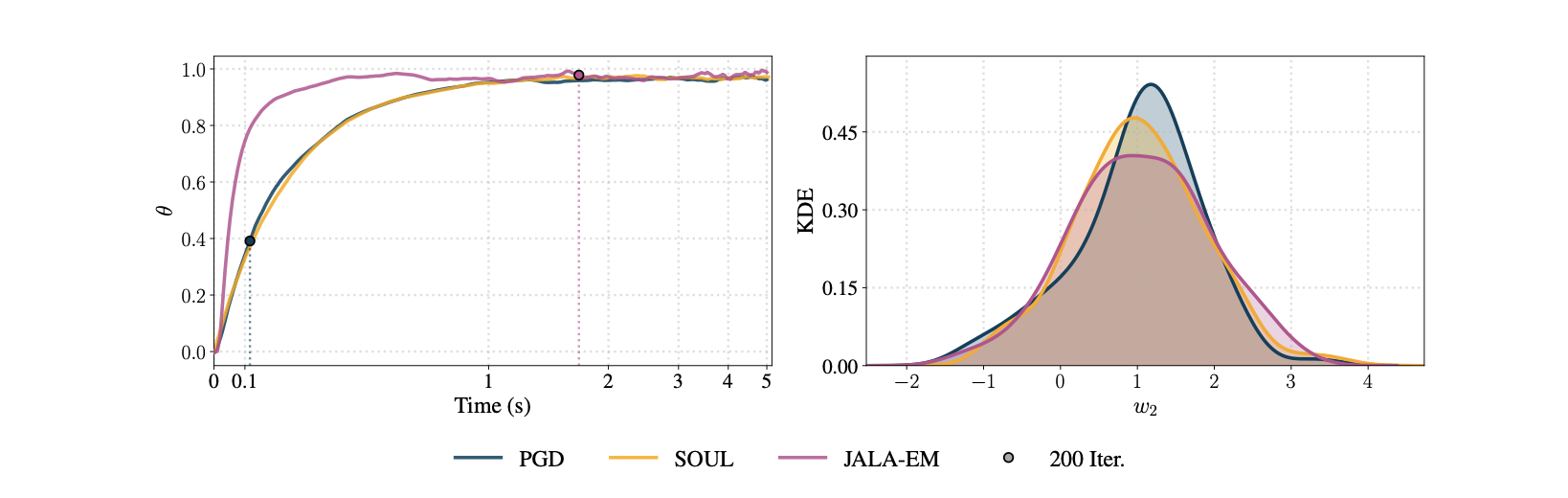
Working with James Cuin and Deniz Akyildiz, we developed non-equilibrium Monte Carlo methods for latent variable models,
enabling efficient estimation of marginal likelihoods and model selection, supported by
non-asymptotic convergence analysis. Moreover, with Yanbo Tang, we generalized this approach is SMC, for instance for reward training of EBMs.
[2]
Cuin, J., Carbone, D., & Akyildiz, O. D., Learning Latent Variable Models via Jarzynski-adjusted Langevin Algorithm. In The Thirty-ninth Annual Conference on Neural Information Processing Systems (NeurIPS), 2025.[13]
Cuin, J., Carbone, D., Tang, Y., & Akyildiz, O. D. (2026). Efficient Stochastic Optimisation via Sequential Monte Carlo. arXiv preprint. -
Wavelet scattering and time series analysis.
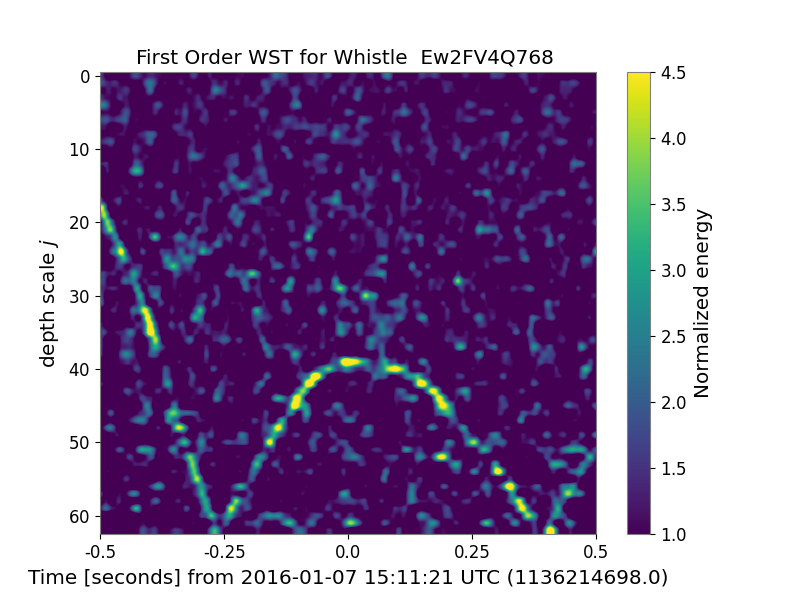
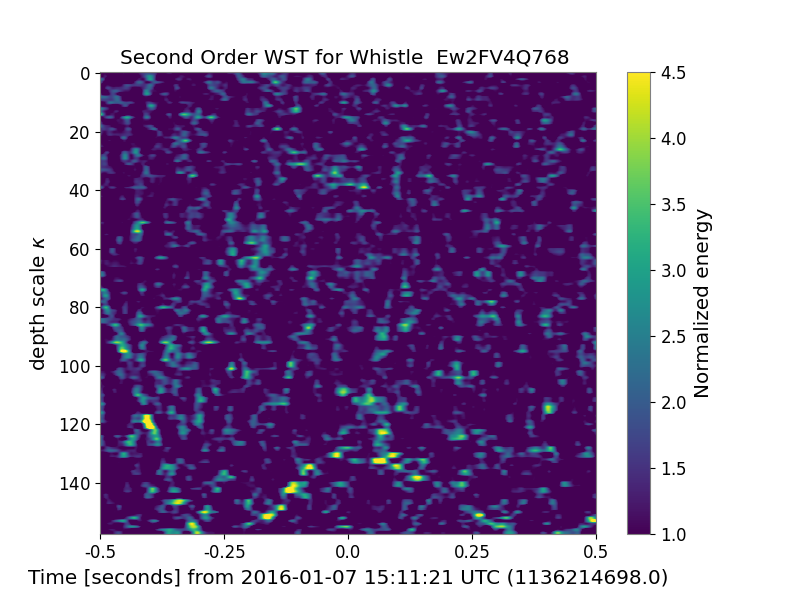
I worked on Wavelet Scattering Transform methods for time series analysis, with applications to gravitational wave data and bioacoustics (marine mammal vocalizations), combining strong mathematical guarantees with improved machine learning performance.
[7]
Licciardi, A., & Carbone, D. (2024). Whalenet: A novel deep learning architecture for marine mammals vocalizations on watkins marine mammal sound database. IEEE Access, 12, 154182-154194.[5]
Licciardi, A., Carbone, D., Rondoni, L., & Nagar, A. (2025). Wavelet scattering transform for gravitational wave analysis: An application to glitch characterization. Physical Review D, 111(8), 084044.
Publications
A list of my publications is available, showcasing my contributions to the field. For a detailed overview, please visit the dedicated publications page.